






















Every listing on the map
The back office, the API and the public site of a Buenos Aires real estate agency, built and run by one developer since 2025.
- Since 2025in production, still shipping
- 135partidos searchable by distance
The brief
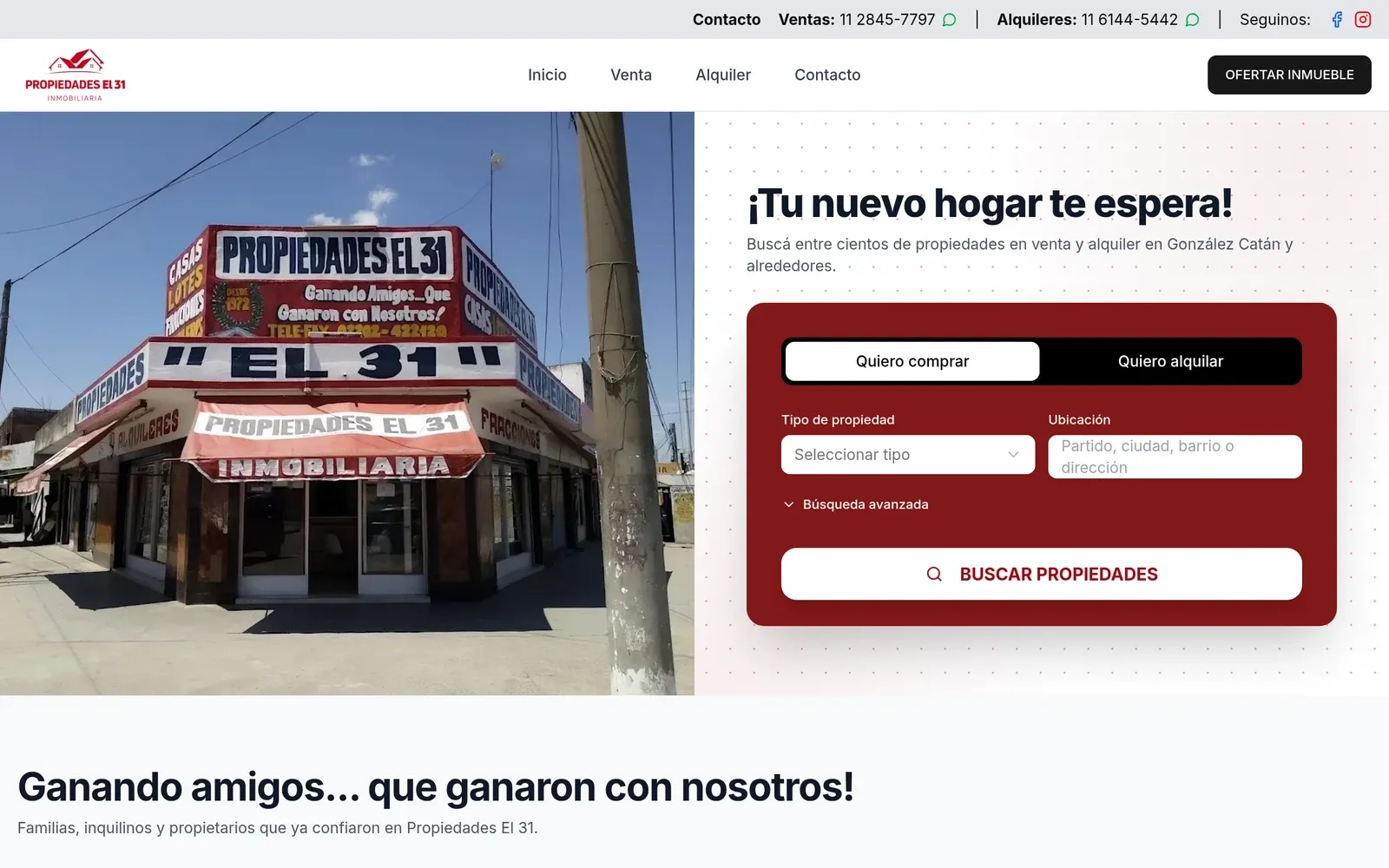
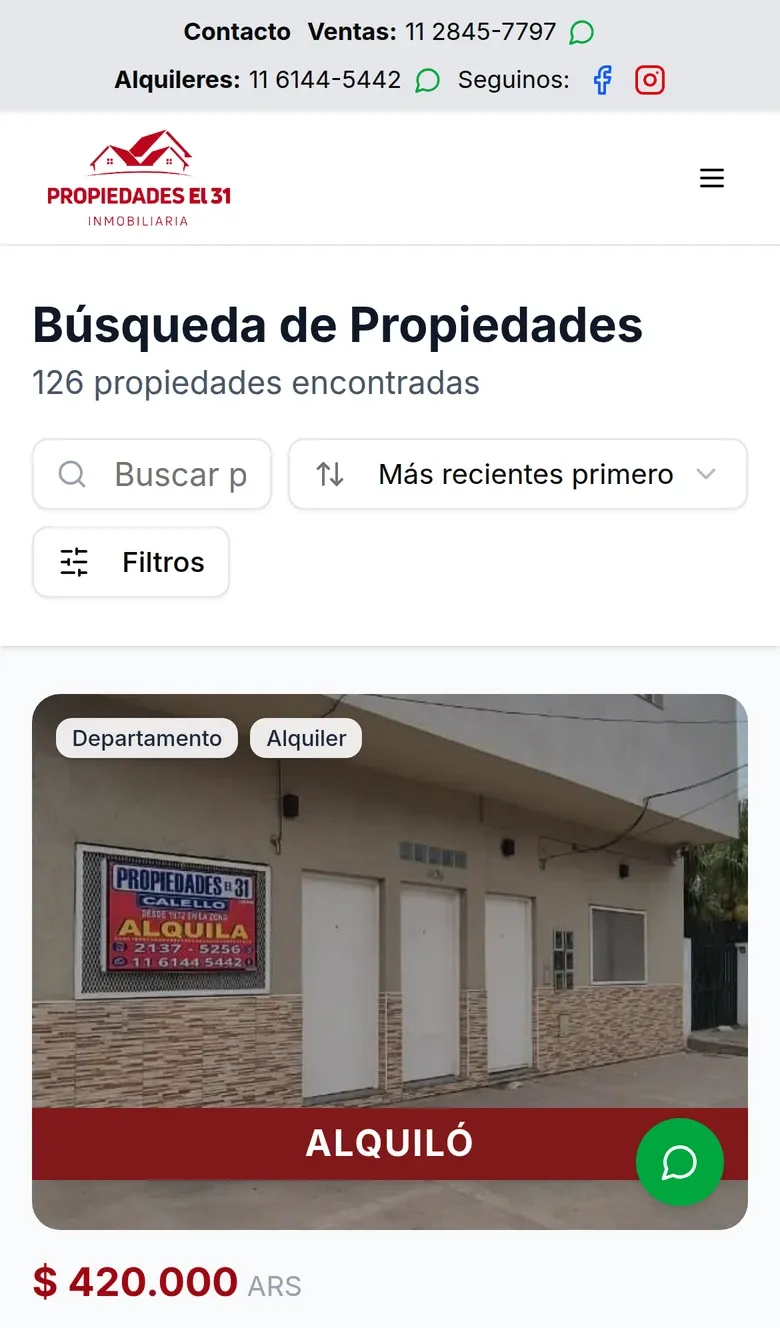
Propiedades El 31 is an established real estate agency in Greater Buenos Aires. Its agents needed one place to load and manage listings, and its visitors needed a site that takes them from a photo to a conversation. I built both, along with the API between them: a back office in Refine and MUI, a Strapi API, and a Next.js site where every listing leads to WhatsApp or a phone call.
Many of the agency’s clients are older and not comfortable with complex interfaces, so plain Spanish labels, large touch targets and predictable screens were requirements from the start.
The knot
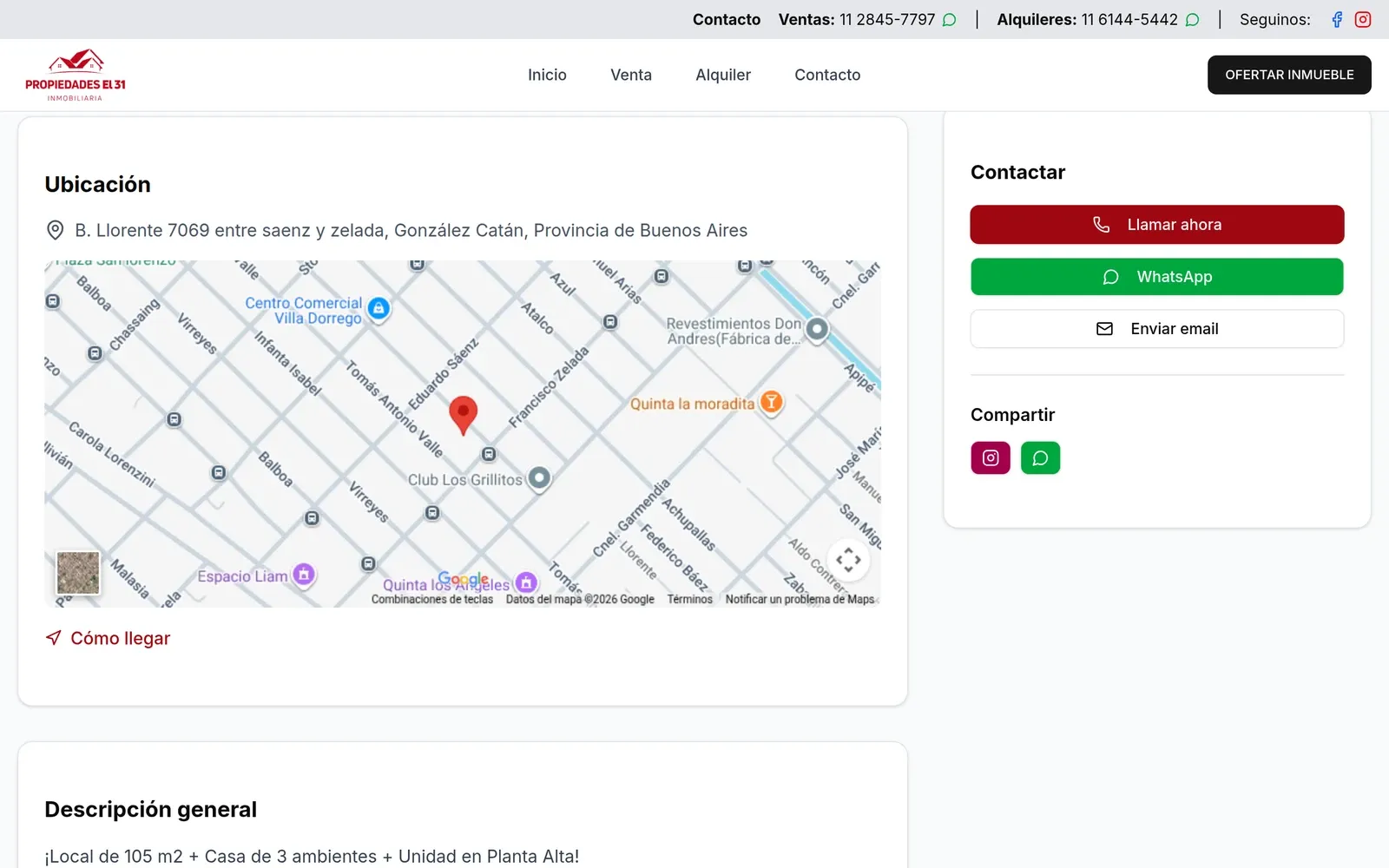
Location was text all the way down. The address model had a coordinates field, typed as a string, that nothing ever wrote or read. The public search fuzzy-matched street names in the browser, so “houses near La Matanza” couldn’t work.
Geocoding the catalogue wasn’t straightforward either. Argentine addresses geocode badly, and Mapbox didn’t know La Matanza or Tres de Febrero, two of the area’s largest partidos: it returned streets with those names.
Untangling it
- Replaced the dead field with latitude, longitude and a record of where each coordinate came from: picked from the address, placed by hand, or backfilled. A re-run of the backfill never overwrites a person’s correction.
- Wrote an idempotent backfill that records why an address failed instead of guessing. A property pinned in the wrong suburb is worse than one with no pin.
- Gave agents a map picker in the property form and a “Sin ubicación” filter to work through whatever the backfill couldn’t place.
- Took the partidos from Georef, the Argentine government’s geographic API, which lists all 135 in the province.
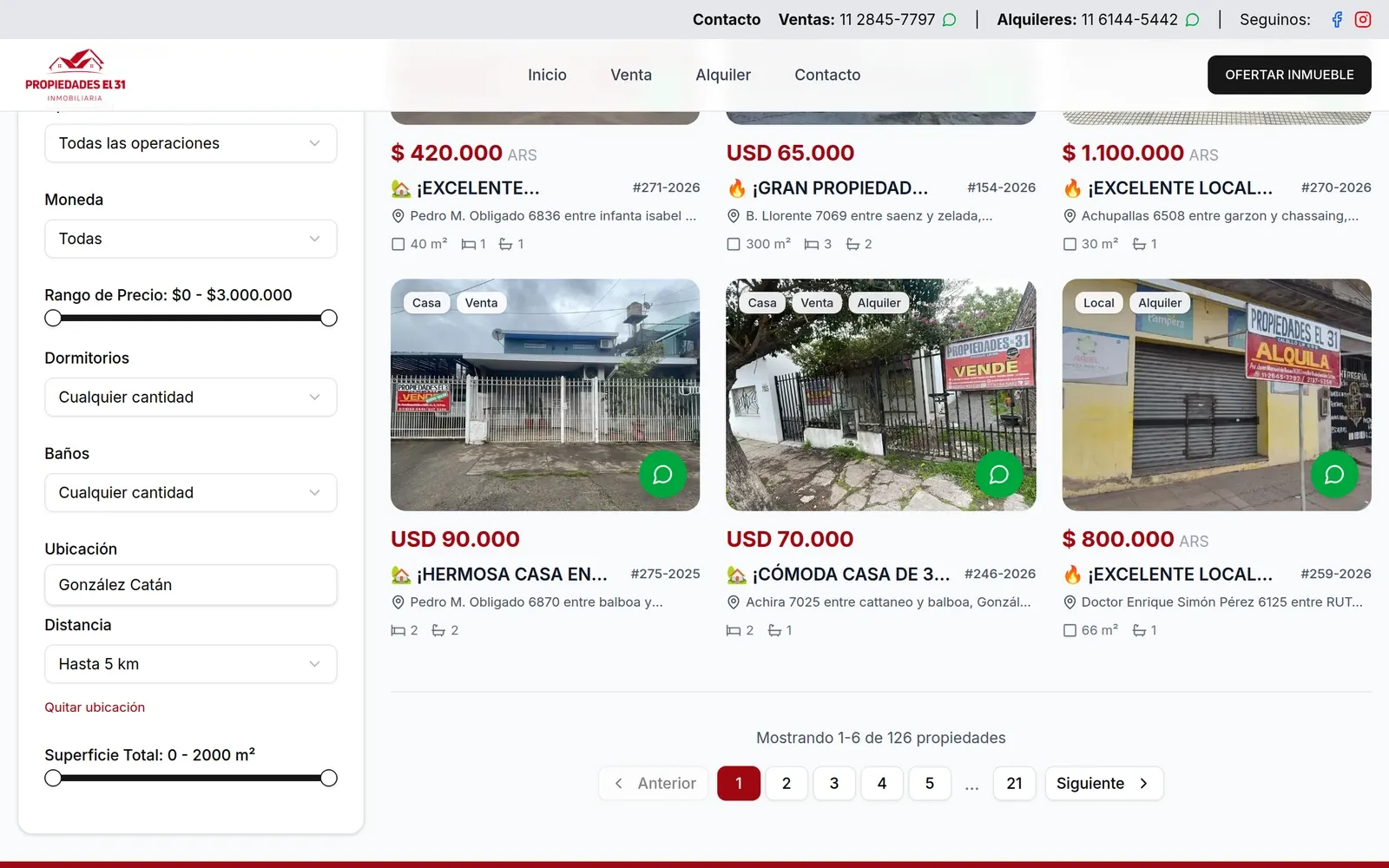
- Moved search to the server: a bounding box narrows it down, a haversine check finishes it, and results come back filtered, sorted and paginated, at URLs you can share.
- Later moved geocoding and maps to Google Maps Platform, with a job that refreshes coordinates before Google’s 30-day caching limit.
What changed
Visitors pick a place and a radius, from 1 to 20 km, and get exactly the listings inside it. Agents see which properties still need a pin and fix them in the form they already use. The work also clears the way for the next step, publishing listings to MercadoLibre automatically, because its API requires coordinates.
The location work is one thread of a longer collaboration. In the same codebase: properties with several units on one lot, separate sale and rental prices, a cash register with owner settlements in PDF, a “Mejorar con IA” button that writes listing copy from the property’s data without inventing anything, a performance and SEO pass on the public site, and a redesign of the back office for non-technical agents. Every release ships with release notes in plain Spanish inside the dashboard.

Stack: Next.js · Refine + MUI · Strapi · TypeScript · Google Maps · Netlify
Want something like this for your business? Let's talk →
Next threadLibrería San PabloB2B e-commerce · 2026 →